









-1000x1000.jpg)















-1000x1000.jpg)





Architectural glass tarnishes primarily through atmospheric corrosion and alkali leaching, a chemical process where moisture in the air interacts with the glass's microscopic surface. Rather than just getting dirty, the glass itself breaks down at a molecular level.
In this blog we will explore the science behind it and the practical solution to combat its effect
Architectural glass is fundamentally made of silica sand melted together with soda ash and limestone. Manufacturers use the float glass process, which pours the molten mixture onto a bed of molten tin, to make sheets of glass. It consists of silicon and oxygen atoms to make the glass easier to melt and shape during manufacturing. The combination of these processes and ‘ingredients’ are the root cause of tarnishing.
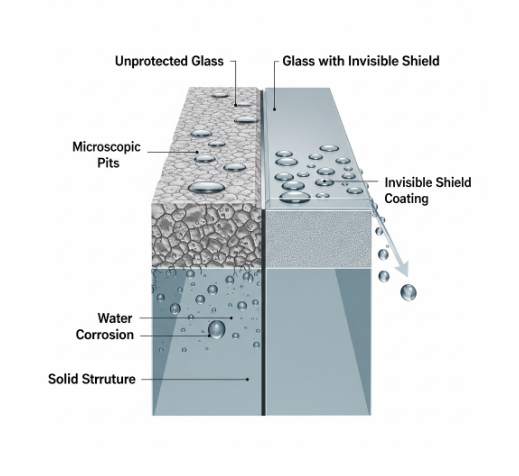
Glass is never perfectly flat at a microscopic level, even with the modern technology and machinery we now have within the industry. These imperfections, coupled with environmental exposure and stress, causes glass to degrade over time.
When moisture (such as humidity or condensation) sits on the surface of the glass, a chemical reaction occurs. Hydrogen ions or hydronium ions from the water exchange places with the loosely bound sodium ions in the glass. The displaced sodium is expelled to the glass surface, creating highly reactive, alkaline compounds like sodium hydroxide. This expelled sodium hydroxide creates a highly alkaline film on the glass surface, forming microscopic pits and eventually forming a milky, white haze
The construction industry represents the majority of the annual production of glass and is the most dominant end-use market for flat glass. There are billions of square feet of existing glass windows, facades and glass clad systems worldwide. While glass is beautiful, modern and energy efficient, it is not moisture, chemical or corrosion resistant due to the reasons detailed above.
Commercial and residential glass is easily damaged by the environment and exposure to weather, pollution, acid rain, carbon emissions, sand, grit, chemicals, cement and aluminum run off. Its very nature is hydrophilic or water, moisture, soil and stain accepting. Its many irregular hills, peaks and valleys trap and hold moisture, pollution and other inorganic contaminants that build-up if not maintained on a regular basis. The chemically active build-up attacks and weakens the glass causing stains, pitting, etching and other permanent damage.
A majority of the existing glass worldwide has already been severely stained, damaged and obscured because it has been left unprotected. Cleaning unprotected glass has become necessary on a monthly or quarterly basis to prevent permanent stains and damage and it is incredibly time, labor and material intensive. Sometimes, there is no viable cost-effective method to restore it to its original condition, and the glass needs to be replaced
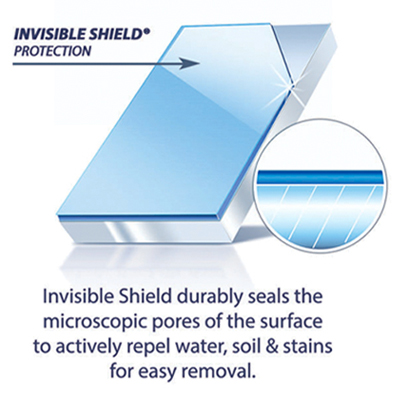
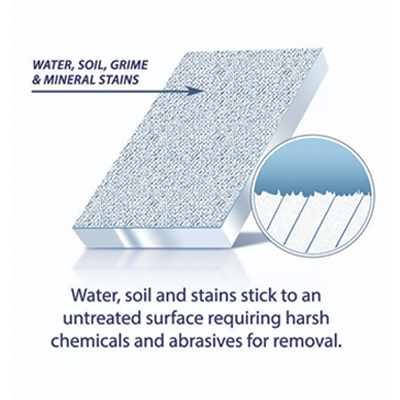
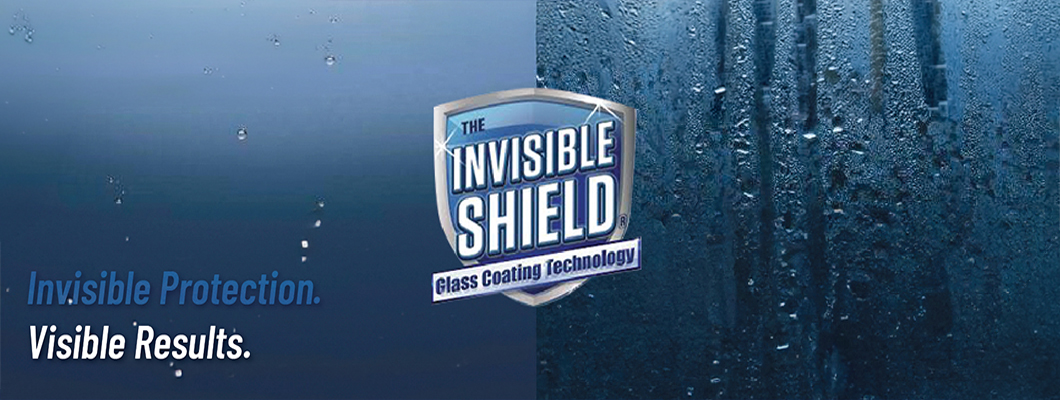
Invisible Shield® by Unelko. Unelko manufactures innovative cleaners, treatments and protective coatings designed to restore, enhance, preserve, and maintain glass. Unelko has mastered monomolecular, nano-scale glass protection that increases glass clarity and protects glass against the corrosive effects of the environment. Unelko pioneered the Invisible Shield® “Easy Clean” Coatings to preserve and protect glass to reduce the frequency and cost of cleaning.
Invisible Shield® is a high-performance, hydrophobic, nano-scale coating that molecularly bonds to architectural glass to prevent tarnishing, pitting, and corrosion.
It is a hydrophobic glass coating that molecularly bonds to all residential & architectural glass to make it remarkably water, soil, stain and corrosion resistant.
By using Invisible Shield® manufacturers and installers of flat glass, windows and facades, walls, partitions, mirrors, shower doors and tile, windshields, marine and solar glass can now offer a better product by protecting the glass against harmful effects of the environment, degradation and corrosion to further enhance appearance and extend the life of glass.
- Cost-effective, lasting glass protection
- UV, weather and abrasion resistant
- Repels water, soil, minerals and contaminants
- Makes glass 92.9% more scratch-resistant
- Prevents unsightly stains, scratches and deposits
- Saves on work, repairs and replacements
- Improves glass appearance and clarity
- Makes cleaning faster, easier and more efficient
- Eliminates the need for harsh chemicals or abrasives
- Saves time and labour, reducing cost of cleaning
- Easily applied and easily renewed
GlassParts are a partner of Unelko, distributing the product across the UK and Ireland. The product is held in stock and can be dispatched the same day for next day delivery.
Get lasting protection for your architectural glass projects!